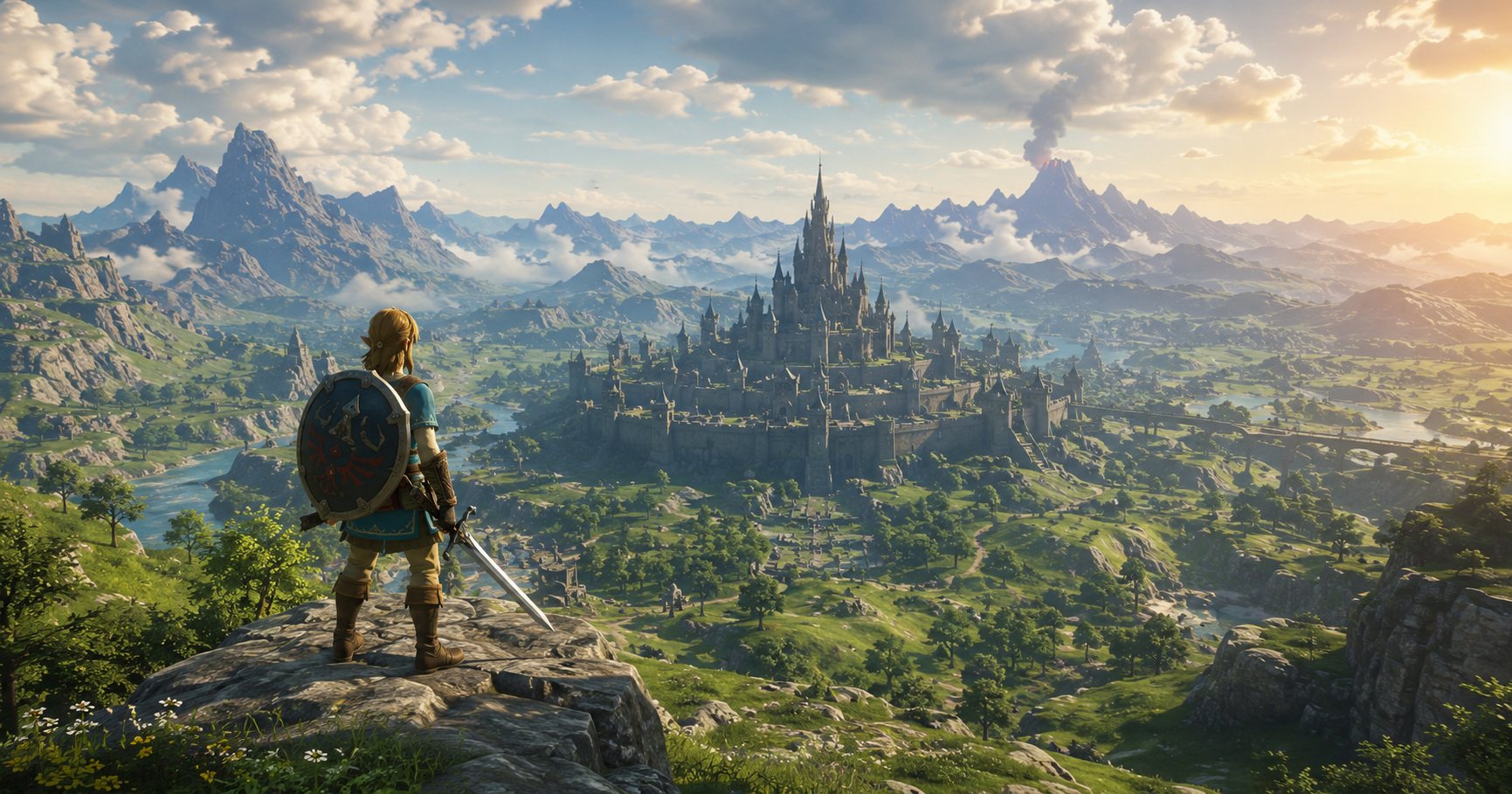
One of the most beloved games ever made is having a moment right now — and it's coming from two directions at once.
On one side: a solo developer just quietly released the final version of his 10-year fan remake of The Legend of Zelda: Ocarina of Time, free for anyone to download and play. On the other: Nintendo has officially announced its own ground-up remake, coming to Nintendo Switch 2 later this year.
Two Ocarina of Time remakes, two very different stories.
The fan remake that ran for a decade
CryZENx started rebuilding Ocarina of Time in Unreal Engine back when the game was already 16 years old. What began as a personal project eventually turned into one of the most followed fan remakes in gaming — stunning visuals, real gameplay mechanics, and a community that grew around every update.
CryZENx has been working on the remake for an entire decade, but recently announced that they'd be ending development on it indefinitely.The reason wasn't a cease-and-desist from Nintendo's lawyers. The reason for the cancellation is simple, and it has everything to do with Nintendo announcing that it's working on a The Legend of Zelda: Ocarina of Time remake of its own for the Nintendo Switch 2. Once Nintendo confirmed their version, continuing the fan project stopped making sense.
As a farewell, CryZENx released everything. The final release covers all areas that CryZENx has remastered, offering over 5 whole hours of gameplay. You can explore environments, fight enemies, and solve puzzles across the areas built over a decade of late nights.
There's also a notable bonus: the 60FPS version was always behind a Patreon wall. But now that the project has been canceled, CryZENx decided to offer it for free to everyone.
CryZENx's farewell message said it all:
"When I dropped my very first project, I honestly didn't think anyone would notice. I never expected a community like this to build around my work. Every single hour I've spent rendering, debugging code, and tweaking designs late into the night — it was all fuelled by your energy, your feedback, and your shared hype for these worlds."
Ten years. Free, as a goodbye gift. That's genuinely something.
The official Nintendo version
Nintendo announced: "The Legend of Zelda: Ocarina of Time: The Nintendo 64 classic returns for a new generation in 2026, reborn exclusively for Nintendo Switch 2."That's nearly all Nintendo has said. The announcement came during the June Direct, and the teaser was minimal — a voiceover about the Kokiri, Link asleep in Kakariko Forest, the Triforce of Courage glowing on his hand, and a modernized logo. No gameplay. No release date beyond "later this year."
One word in the announcement has caught a lot of attention: reborn. Nintendo initially described it as a "full remake" with updated visuals and character designs, then quietly changed that language. That shift stands out, because it leaves the final scope looking a little less settled.
Does "reborn" mean a ground-up rebuild, or something closer to an enhanced remaster? Nobody outside Nintendo knows yet. Gamescom 2026 is approaching, and fans are hoping for more details there.
What makes Ocarina worth all this attention
Released in 1998 for the Nintendo 64, Ocarina of Time has a Metacritic score of 99, topping the site's list of the best games of all time. No other game has matched it in nearly 30 years.
It was the first Zelda game in 3D, and it essentially invented the vocabulary that 3D action-adventure games still use today — Z-targeting, context-sensitive buttons, the way dungeons flow into each other. Games released in 2026 still borrow from design decisions made for Ocarina in the mid-90s.
The game received a remaster for Nintendo 3DS in 2011, which was well-received but felt like a light touch. A proper ground-up remake has been something fans have wanted for years. CryZENx's project was, in part, a proof of concept that it could be done and look extraordinary.
Two versions, one question
The interesting tension here is that CryZENx's fan remake and Nintendo's official version were pursuing similar goals with different resources. CryZENx had Unreal Engine 5, unlimited creative freedom, and a decade of dedication. Nintendo has a $60 price tag, a Switch 2 launch window, and the original team's blessing.
What fans are waiting to see is whether Nintendo takes creative risks with the remake — restoring content that was cut from the N64 version, expanding areas that the hardware couldn't fully realize — or whether "reborn" means something closer to "same game, new coat of paint."
Given the price point and the anticipation, the pressure to deliver is real.
In the meantime, CryZENx's version is free. That's a pretty good way to spend time while waiting.
Sources: Gaming Bible, DSOGaming, VGC, Kotaku, Softonic (July 2026)
Written by

Breaking down what's happening in tech — AI breakthroughs, security incidents, new devices, and the stories that matter.